Aberdeen, 2-3 September 2026:
The EIC’s Energy Exports Conference (EEC) 2026 in Aberdeen brought together energy supply chain companies, developers, policymakers, investors and other industry decision-makers who discussed where international opportunities are developing and what companies need to compete for them.
Across the conference and subsequent discussions, speakers focused on investment certainty, policy visibility, infrastructure constraints, supply chain capability and the gap between projects announced and projects actually moving into construction. Hydrogen, offshore wind, nuclear, decommissioning, data centres and opportunities in markets including Italy all featured prominently.
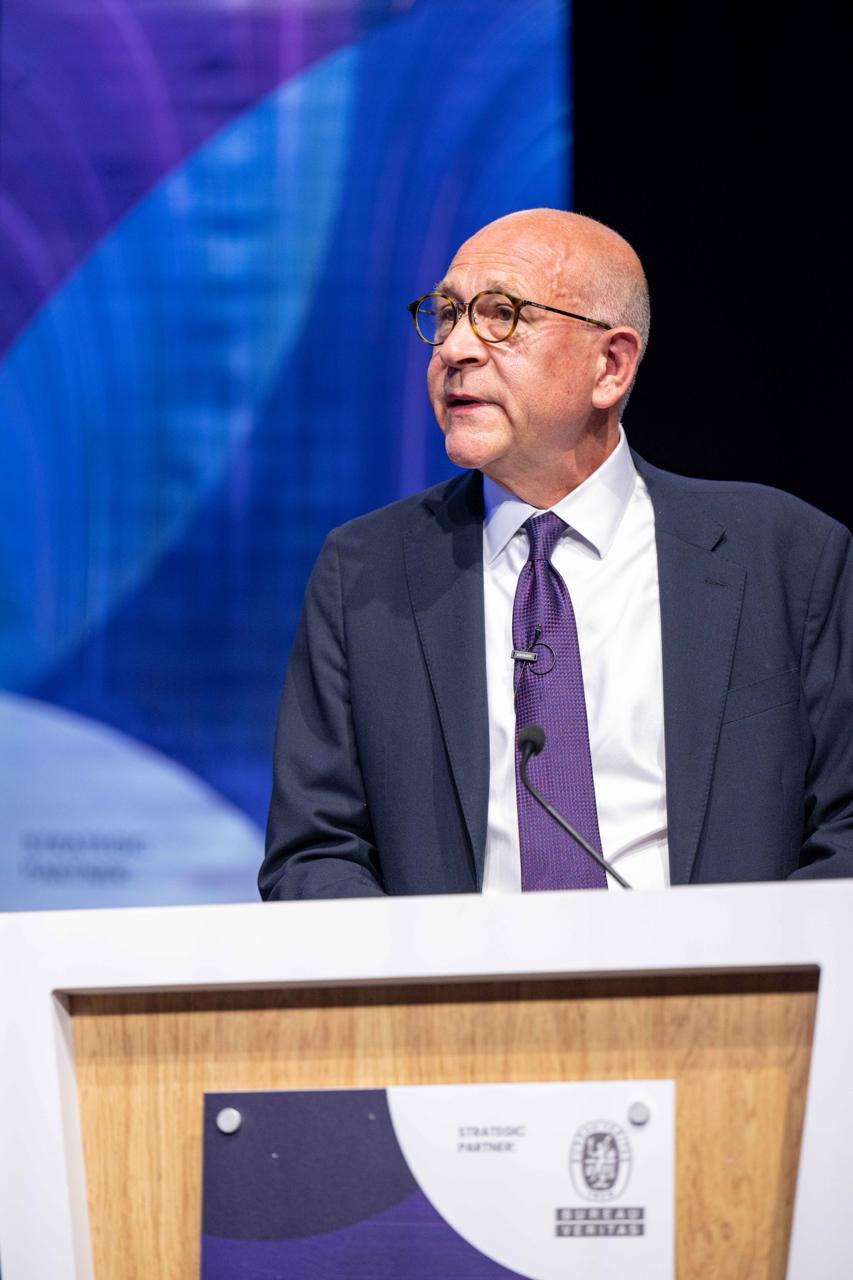
Bureau Veritas was EEC 2026’s strategic partner.

Energy investment grows as policy shifts towards sovereignty, EEC speakers say
Energy industry and policy leaders gathering at EEC shared a pragmatic optimism about the state of the energy industry as they discussed themes ranging from energy security to investment confidence and supply chain capability. Executives from UK government-linked bodies also set out how governments can encourage investment through direct investment and market mechanisms.
EIC CEO Stuart Broadley said energy policy is moving beyond security towards sovereignty, while investment in energy, grids, infrastructure and data centres continues to grow. At the same time, he said, uncertainty is making partner selection more important.
Dan McGrail, CEO of Great British Energy, described GBE as an activist investor with a public purpose. It still needs to invest commercially and see a route to return, but its investments also need to deliver additionality.
Its strategy combines project development and investment across local, onshore and offshore energy, alongside a £1bn UK supply chain programme. McGrail said he wants GBE to use its capabilities and investments to help companies diversify and transition, creating UK champions that can ultimately export their products and expertise.
Investments in Naked Energy and Pentland Floating Offshore Wind Farm are part of that effort to build domestic capability in emerging clean-energy industries.
Discussing Allocation Round 8, Neil McDermott, CEO of Low Carbon Contracts Company, said demand for Contracts for Difference remains strong. AR8 is being assessed, and the government has greater flexibility to consider bids and adjust budgets across a wider range of technologies.
The CfD remains attractive to investors because it provides a long-term, inflation-linked strike price and contractual protections including force majeure and change-in-law provisions. From Allocation Round 7, CfD terms for several technologies were extended from 15 to 20 years. McDermott said this better aligns contracts with asset lives and can help spread costs over a longer period.
Pauline Innes of the North Sea Transition Authority was pragmatically optimistic about the North Sea. A more mature UK Continental Shelf creates a visible pipeline of decommissioning work, while UK companies are well placed to export that expertise internationally. She also called for more focus on securing value in the UK and clearer expectations around in-country content.
Bertrand Martin of Bureau Veritas argued for ambition with pragmatism. Conventional and newer forms of energy will both have a role, while investors still need confidence that assets can operate safely and reliably.
Penta Global Engineering’s Sujay Nair pointed to approximately $50bn of opportunity in the UAE through 2030, spanning oil and gas and newer energy projects. Localisation, skills and energy security remain central to that market.

Hydrogen FIDs slow in 2026 as costs and weak demand hold back projects
EICDataStream is tracking 1,253 hydrogen projects globally, representing an estimated $1.59tn of CAPEX, but only 12 had reached final investment decision so far in 2026 when the data was presented at EEC, compared with 29 at the same point last year.
Since the start of 2025, 53 projects worth approximately $39bn have reached FID, EIC Energy Analyst Jack Boggis told delegates.
Most of the global pipeline remains at feasibility stage, with high production costs, regulatory uncertainty and weak demand or offtake continuing to hold projects back.
Europe has the largest proportion of hydrogen projects under or pending construction, at approximately 19% of its regional project pipeline.
EIC data points to approximately 33GW of electrolyser capacity potentially coming online in Europe by 2030. In Asia, the figure stands at 34GW for the same period. Boggis said actual delivery is likely to be much lower because so much of the capacity remains at an early stage. On the current trajectory, he said the EU’s 40GW electrolyser target will not be met by 2030.
Funding and infrastructure also featured heavily in the conference discussions.
Bureau Veritas presented results from its Global Energy Transition Report 2026, based on responses from nearly 1,000 energy experts and industry leaders across 11 regions. Of those surveyed, 39% identified large-scale public investment in grids and grid resilience as the main priority for securing the energy transition, followed by long-term market design that rewards reliability and flexibility at 22%, and faster permitting and planning reform at 18%.
For the UK, speakers argued for doing more at scale in areas where the country already has strong capability, including the North Sea. Internationally, the Middle East was repeatedly identified as one of the strongest markets for near-term growth.

UK decommissioning supply chain targets Brazil and Australia export markets
How can the UK decommissioning supply chain win more work overseas? That was the focus of a presentation by Roseanna Allnutt at EEC, looking at international decommissioning markets and the support available to UK companies seeking to enter them.
The UK decommissioning supply chain has extensive expertise in areas including well plug and abandonment, subsea cutting and retrieval, platform removal engineering, offshore logistics and hazardous materials management. As offshore infrastructure around the world reaches the end of its operational life, that capability has an expanding international market.
Allnutt set out UK government support available to companies looking to enter or grow in overseas markets, including export finance through UK Export Finance, export advice and market guidance through the Department for Business, Innovation, Science and Trade, and access to in-market specialists across the government’s international network.
This sits alongside support provided by organisations including Scottish Development International, Decom Mission and the EIC.
Brazil and Australia were identified as markets with significant potential for UK decommissioning expertise. Both offer opportunities, but success depends on understanding local requirements, building partnerships and developing the right route to market.
Further opportunities for UK companies to engage internationally include a Brazilian delegation attending the OEUK Decommissioning Conference in November and a Scotland Office-led trade mission to Energy Exchange Australia in March 2027.
The UK’s decommissioning sector has built decades of expertise in the North Sea. The commercial question is how effectively that capability can now be converted into export work as decommissioning activity expands elsewhere.

UK decommissioning activity rises as supply chain bottleneck looms to 2032
Sam Long, CEO of Decom Mission, said the UK is the world’s largest active oil and gas decommissioning market, with £2.6bn of activity in 2025, up approximately 8% from £2.4bn in 2024.
Plug and abandonment accounts for £1.3bn of that spend. A backlog of approximately 500 wells remains, and Long said the current rate of P&A is arguably too slow.
He said UK decommissioning activity is set for significant growth, which could create tightness in the global supply chain given the market’s reliance on UK capability. That bottleneck is already emerging and is forecast to last until approximately 2032, he said.
Domestic oil and gas and decommissioning work will not sustain all of the capability built up across the North Sea, although decommissioning remains an important bridge activity for the future.
The UK has decades of experience in late-life operations, P&A, removal, regulation and decommissioning standards. Other geographies and sectors, including nuclear, are now reaching the point where that experience has a clear export market.
Dawn Robertson, Global Oil and Gas CAPEX and Decommissioning Director at Bureau Veritas, put global decommissioning spend at approximately US$10bn a year, with more than US$200bn expected across 2021–2040. The top 10 operators have approximately US$140bn in declared decommissioning commitments, she said.
Costs vary sharply by geography. Bureau Veritas said the same decommissioning job can cost three to five times more depending on location. Backlogs are also building. Canada has more than 139,000 inactive wells awaiting closure, while more than 1 million US wells have no solvent operator.
Robertson argued for much earlier planning. Bureau Veritas estimates that an integrated model covering late-life operations, cessation-of-production planning and decommissioning can cut costs by 20–30%. That means preparing five to 10 years ahead, aligning work with rig and vessel availability and securing decommissioning funding while assets are still generating cash.
It also means assessing whether infrastructure still has a commercial use before removing it. Offshore infrastructure can potentially be considered for life extension, CCS, offshore wind substations or hydrogen hubs.
EIC Head of Consult Diveena Danabalan presented EICAssetMap data showing the maturity of the oil and gas asset base. Across Europe, 83% of assets have reached the age threshold she discussed. In the UK, the figure is 73%. A similar trend is emerging in nuclear, where ageing fleets are creating long-term decommissioning requirements in several major markets.

Europe offshore wind build-out set to fall well short of earlier 2030 ambitions
Europe’s offshore wind build-out is falling well short of earlier policy ambitions. For the supply chain, the issue is how much capacity is actually moving towards delivery.
One EEC speaker said Europe had approximately 38GW of offshore wind installed by the end of 2025 and added approximately 2GW during the year. The same speaker expected European capacity in 2030 at approximately 73GW, against an original policy ambition of approximately 140GW.
EIC Head of Consult Diveena Danabalan presented the latest EICDataStream view of offshore wind opportunities in a discussion chaired by Rebecca Groundwater, EIC Global Head of External Affairs.
EIC data shows substantial capacity moving towards construction. Germany has 5.4GW under construction, Poland 3GW, the Netherlands 1.6GW, Denmark 1GW and France 1GW. Taiwan has another 2.2GW under construction and South Korea 2.5GW. France also has a 10GW bid round open.
Danabalan said a credible project needs revenue support, a committed developer, permits, grid connection and finance.
A later session, chaired by EIC CEO Stuart Broadley, looked at the wider North Sea and Offshore Europe 2027. Speakers described one offshore supply chain working across oil and gas, decommissioning, electrification, CCUS, hydrogen and offshore wind.
Oil and gas still dominates the current European offshore market, while transition activity is growing at an uneven pace and North Sea spending is becoming more weighted towards operations.
Speakers also pointed to ageing infrastructure, cost inflation, constrained equipment and workforce availability, and the need to preserve UK offshore capability as the market changes.

Data centre growth opens new power and infrastructure work for energy supply chain
Data centre growth is becoming an energy supply chain story as much as a digital one.
EEC’s Power is King for Data Centres session examined the technology and infrastructure that data centres depend on, including electricity supply, grid capacity, cooling, construction and the equipment needed to keep facilities running.
EIC CEO Stuart Broadley and EIC Director of Market Intelligence Neil Golding joined the discussion alongside industry speakers.
The first issue is power. Data centres need large amounts of reliable electricity, and new developments are arriving as grids already deal with rising demand from electrification and other industries. Getting a site connected can determine whether a project moves ahead.
For the supply chain, opportunities extend across power generation and distribution, transformers and switchgear, backup generation, cooling, electrical systems, engineering and construction, as well as the operation and maintenance of critical power infrastructure.
There is also the question of where the electricity comes from.
Data centre developers are looking at renewable power, gas generation and nuclear alongside grid supply as they try to secure enough capacity for projects that cannot afford interruptions.
For UK energy companies, much of this work is already familiar. The skills used to design, build, operate and maintain complex energy infrastructure can also serve a data centre market whose physical requirements are becoming larger and more demanding.
Italy energy pipeline spans offshore wind, grids, nuclear and data centres
Italy’s role in energy extends well beyond the projects being built at home. Its engineers, manufacturers and contractors sit between Europe, the Mediterranean and North Africa, and equipment designed and made in Italy frequently ends up in energy projects elsewhere in the world.
That was the starting point for an EEC discussion chaired and introduced by Sara Castiglioni, Business Development Manager, Southern Europe at the EIC.
Castiglioni said Italy’s position, combined with the strength of its engineering base, gives its supply chain access to opportunities across several neighbouring and international markets.
The domestic project pipeline is broad. EICDataStream shows energy transition projects account for just over 31% of projects proposed for development in Italy but 57% of the associated CAPEX.
Offshore wind is one of the largest areas of proposed development. The EIC is tracking 50 projects representing 40GW of capacity, with much of that pipeline still at feasibility stage. Italy is targeting 2.1GW of installed offshore wind by 2030, while proposals point to 20GW of floating offshore wind by 2050.
The electricity network will also have to keep pace. EICDataStream tracks 20 proposed transmission and distribution projects, while Terna’s 2025–34 development plan commits more than €23bn to Italy’s electricity infrastructure.
Nuclear is back in the policy discussion. A bill setting out a framework for sustainable nuclear power passed the Chamber of Deputies on 4 June 2026, with modular and advanced nuclear technologies among the areas under consideration.
Data centres add another source of power demand and project activity. The EIC is tracking 13 proposed developments representing 2.5GW of IT capacity. Italy has an estimated 1.1GW operating today, while the EEC presentation put expected capacity at 4GW by 2030.
The session ranged across conventional oil and gas, floating offshore wind, nuclear, grids and data centres. Speakers repeatedly returned to the gap between project ambition and projects that can get financed and built, and the need for closer work among industry, policymakers and lenders.

Global nuclear pipeline reaches $1.58tn but few projects reach FID
The global nuclear pipeline is growing, but a large share of it remains some distance from construction, according to EIC Energy Analyst Jack Boggis, who presented the latest EICDataStream-based insights on the market at EEC.
The EIC is tracking 223 nuclear projects worth an estimated $1.58tn in CAPEX, excluding China, Russia and Iran.
These comprise 85 large-scale nuclear projects, 120 small and advanced modular reactor projects and 18 fusion projects. Since 2020, 160 new nuclear projects have been announced.
Of those, 113 are small modular reactor or advanced modular reactor projects, showing how much attention is moving towards smaller reactor designs.
But only eight projects had reached final investment decision since 2025 when the figures were presented, representing approximately $94bn of CAPEX.
Boggis told delegates that Europe could see approximately 55GW of new nuclear capacity come online by 2035, with North America at approximately 27GW. Much of that pipeline still has work to do before construction starts.
Approximately 53% of the expected European capacity is at feasibility stage, rising to 74% in North America.
The US is one market to watch. It has more nuclear projects in active development than any other country tracked in the presentation, with much of the activity coming from SMRs and AMRs.
Growing electricity demand from data centres is part of that activity, with technology companies already signing long-term power agreements linked to existing and planned nuclear generation.
In Europe, Rolls-Royce SMR projects are progressing in the Czech Republic and Sweden, Poland is preparing the site for its first nuclear power plant, and the Netherlands has commissioned design work for two new reactors. Several European countries are also extending the lives of existing plants or increasing their capacity.
